When people compare storage options, they usually start by asking how big a space they need. That question makes sense when you are renting a unit, but it is not the only way storage can be priced. A growing number of providers now charge for the belongings you actually store rather than the room they sit in, and understanding the difference can help you choose the arrangement that suits your move, your budget and your patience.
How unit-based storage works
With traditional self storage, you rent a fixed space for a set period. You pay for the whole of that space whether you fill it to the ceiling or leave half of it empty. The attraction is simplicity: you have a defined area, you can usually visit it, and you organise it however you like.
The difficulty is guessing the size. Most people are poor judges of how much room a household takes up once it is boxed and stacked. Choose too small and you face a scramble on moving day. Choose too large and you spend the whole term paying for air.
How item-based pricing differs
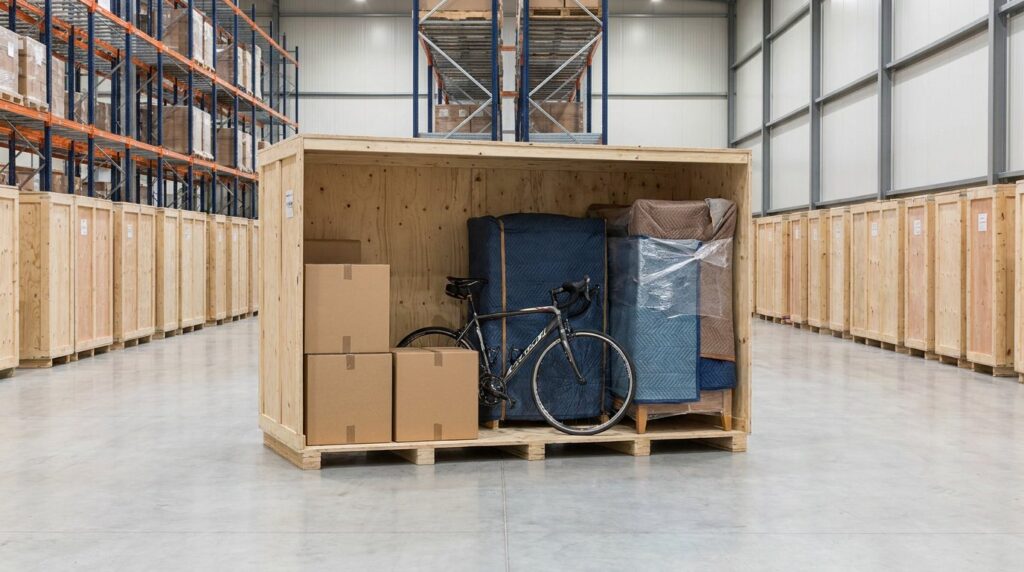
Item-based pricing turns the question around. Instead of asking how big a room you need, the provider asks what you want to store. A sofa, a bed frame, a dozen boxes and a bicycle are priced as a list, and that list is what you pay for. There is no empty corner on the bill because there is no corner to rent.
This model usually goes hand in hand with a collection service. Because the provider is handling and storing the items in a managed facility, they can arrange things efficiently rather than leaving each customer with a sealed room. For the customer, the practical result is that you only need to know what is going, not how many square feet it will occupy.
Who tends to benefit
Item-based storage often suits people storing part of a household rather than all of it. If you are decluttering before a sale, clearing a room for building work, or keeping a few pieces of furniture while you live somewhere smaller, a unit can feel oversized for the job. Paying per item keeps the arrangement in proportion to what you are storing.
It also helps people who do not want to do the heavy lifting. Renting a unit normally means hiring a van, loading it, driving to the site and unloading, then repeating the process in reverse later. When pricing is based on items, the collection and redelivery are often built into the way the service runs, which removes those trips altogether.
A unit may still suit you if you need frequent personal access to your belongings.
A Huddersfield example
For anyone weighing up storage in Huddersfield, HD3 Storage is one local provider that uses this approach. It is a trading style of HD3 Removals and Storage Ltd, and it describes its service as door to store: its own removals team collects belongings, protects and loads them, and takes them into clean, dry, managed storage. Pricing is based on the items stored rather than the size of a unit, with smaller requirements priced and booked online and larger or full-home storage quoted individually.
HD3 Storage includes £2,000 of contents cover as standard, which can be increased, and customers choose an estimated term that can be extended. When the time comes, redelivery is booked and items are placed in the rooms the customer chooses.
Questions to ask when comparing quotes
Whichever model you lean towards, compare like with like. A unit price and an item-based price are not directly comparable unless you account for everything around them. Useful questions include:
- Does the price include collection and redelivery, or will you need to hire a van?
- Is contents cover included, and can it be increased?
- How easy is it to add or remove items part way through?
- What happens if you need to extend the term?
- Can items be returned in stages rather than all at once?
Factor in your own costs for fuel, van hire and time off work before deciding which is cheaper.
Neither pricing model is right for everyone. The best choice depends on how much you are storing, how long for, and how much of the moving you want to do yourself. Start with an honest list of your belongings, and let that guide the conversation with any provider you approach.