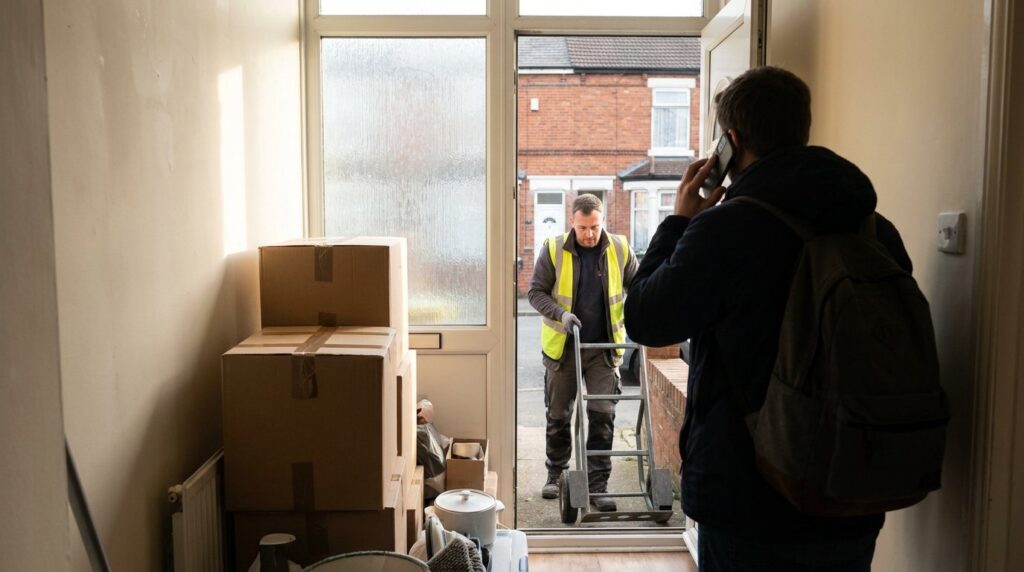
Most moves are planned weeks ahead, but not all of them. A tenancy can end abruptly, a relationship can break down, a relative may need to move into care, or a completion date can suddenly be confirmed for the next morning. When time runs out, the job is not to recreate a perfectly organised move in a few hours. It is to get the essentials where they need to be, safely, and to leave the rest for later.
Situations where urgent help is genuinely needed
Short-notice moves tend to fall into a handful of patterns. Some are about property: a landlord needing vacant possession, a sale completing earlier than expected, or a flat that has become unsafe after a leak or fire. Others are personal, such as leaving a shared home quickly or moving an elderly parent after a hospital stay.
In each case, it helps to be honest about what actually has to happen today. Often only part of a household needs to move immediately, while the remainder can follow once things have calmed down.
What is realistic on the day
Removal firms plan their diaries in advance, so urgent work always depends on whether a crew and a van are free. Calling early in the day, being flexible on timing and accepting a smaller first load all improve the odds. It is worth asking whether a firm can do a partial move now and return for the rest, or move items into storage until a new address is ready.
For anyone in the Breckland area, J.B. House Clearance & Removals is one family-run option covering Norfolk and Suffolk. Their clearance pages note that urgent or same-day work may be possible where availability allows, so it is worth checking for same day removals in Thetford rather than assuming either way. They also handle clearances and waste, which can matter when a property has to be emptied completely rather than simply moved out of.
Give the firm the right information quickly
When you call, have the key facts ready so the firm can say yes or no without delay:
- Both addresses, including floor levels and whether there is a lift.
- A rough list of large items such as beds, wardrobes, sofas and white goods.
- Any access problems: narrow lanes, long walks from the kerb or restricted parking.
- Whether anything needs to be cleared or disposed of rather than moved.
- The latest time you can be out of the property, if there is a deadline.
Packing fast without making a mess of it
With hours rather than days, prioritise by room and by importance. Start with a single bag or box for the next 48 hours: medication, chargers, documents, keys, a change of clothes, toiletries and basic food for pets. Keep this with you rather than on the van.
Next, focus on items that are hard to replace or awkward to pack loosely, such as glassware, framed pictures and electronics. Clothes can often go straight into bin bags or suitcases. Bedding and towels make good padding. Label boxes with the destination room in large letters; detailed contents lists can wait.
Empty the fridge and freezer early, and defrost the freezer if it is going on the van. Unplug washing machines and disconnect cookers only if you know how to do so safely, or leave them for a qualified person.
Paperwork and loose ends
Even in a rush, take meter readings at both properties and photograph them. Let your energy suppliers, council tax office and broadband provider know your dates as soon as possible. Set up a postal redirection, and tell your bank and GP surgery once you are settled. If you are leaving a rental, photograph each room before handing back the keys, as this can help with any later conversation about the deposit.
Afterwards: catching up
An urgent move rarely ends neatly. Expect a few days of living out of boxes, and plan a second, calmer session to unpack, sort and decide what you no longer need. Anything left behind at the old address should be dealt with promptly, whether that means a return trip, a collection or arranging a clearance.
A move at short notice is stressful, but it is manageable when you focus on essentials, communicate clearly and accept that some tasks can wait. Ask early, stay flexible on timing, and treat the first trip as the start of the move rather than the whole of it.