An accountant, a solicitor’s branch, a physiotherapist or an independent financial adviser all share one problem when the lease runs out: clients still expect the phone to be answered and the appointment to go ahead. Moving a small professional practice on or near a town centre such as Clacton-on-Sea is less about heavy lifting than about keeping confidence, confidentiality and continuity intact from one address to the next.
Tell people in the right order
Start with the people who are affected most directly. Staff need to know first, including what the new journey to work will look like. Regular clients come next, particularly older clients in Clacton, Holland-on-Sea and Frinton who may have been climbing the same stairs to the same office for a long time and will want reassurance that parking, access and opening times are workable at the new premises.
After that come the less obvious contacts. Professional bodies, insurers, banks, software suppliers, the landlord and anyone who sends post should all be on one written list, with a tick against each as they are updated. Arrange mail redirection, and keep the old address on your letterhead only until the day the move happens.
Treat paperwork as the highest risk item
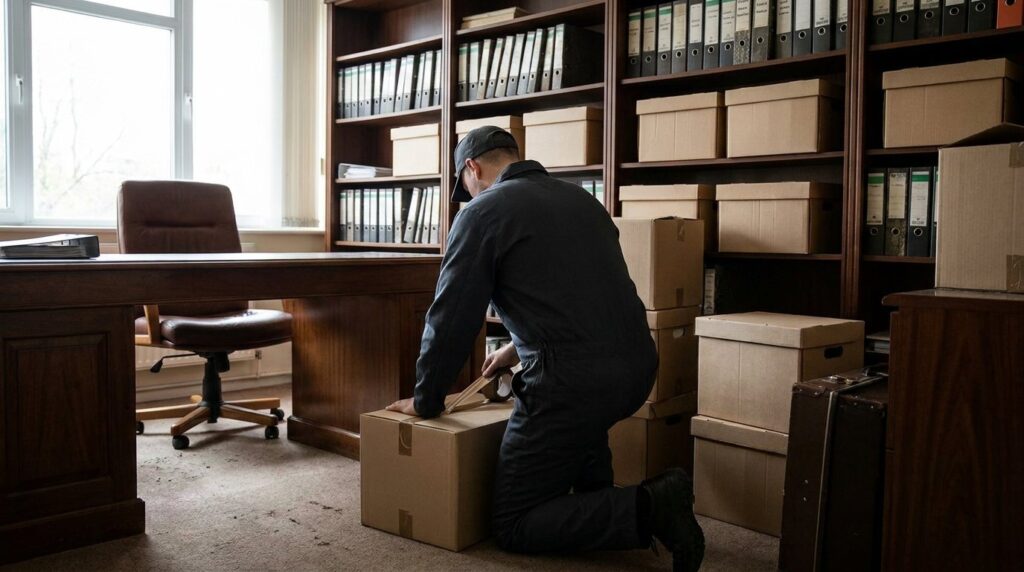
A desk can be replaced. A box of client files left unattended in a corridor is a far more serious matter. Practices handling personal data should treat the move as a data protection exercise, and the Information Commissioner’s Office publishes general guidance on looking after personal information that is worth reading beforehand.
- Sort files before the move, and securely shred anything you are no longer required to keep.
- Pack sensitive records into sealed, numbered boxes and keep a list of what each number contains.
- Use neutral labels. “Box 14” tells a passer-by nothing, while a client’s surname tells them plenty.
- Decide who signs the boxes out of the old office and who signs them in at the new one.
- Check that the new premises can be locked before the first box arrives.
Choose a moving window around your diary
For most small practices, the quietest stretch is obvious once you look at the calendar. Accountants will want to stay well clear of the January self-assessment deadline, for example, while a clinic might prefer to block out a Friday afternoon and reopen on the Monday. Agree the window with the people doing the work, and make sure that both landlords are content with access at those times.
A High Street location brings practical questions too. Ask how a vehicle will get close to the door, where it can wait, and whether a narrow staircase or shared entrance will slow things down. Smaller vehicles sometimes solve problems that a lorry would create. RNA Removals, an independent family-run firm with its head office on the High Street in Clacton-on-Sea, offers office removals in Clacton that cover planning, careful packing of confidential documents and fragile equipment, and the dismantling and reassembly of office furniture, with the aim of keeping disruption to a minimum.
Get the new room ready before the furniture arrives
Draw a simple floor plan and number each desk, cabinet and consulting room. Give the same numbers to the crates that belong there, so nobody has to stand in a doorway asking where things go. Telephone lines and broadband deserve the most attention because they are outside your control and tend to need booking well ahead. If the connection will not be ready, arrange call forwarding to a mobile so that clients still reach someone.
Look at accessibility with fresh eyes as well. A client who manages one step at the old office may struggle with a heavier door or a steeper ramp at the new one. Better to discover that during a quiet visit than during someone’s first appointment.
The first morning back
Bring the essentials in a separate, clearly marked crate: laptops, chargers, keys, the appointment diary and something to make tea with. Test the printer, the phones and the card machine before the first client arrives, and leave a clear notice at the old address for anyone who missed the announcement.
A practice that plans its move this way can close one door and open another with very little fuss. Clients should notice the new carpet, and not much else.