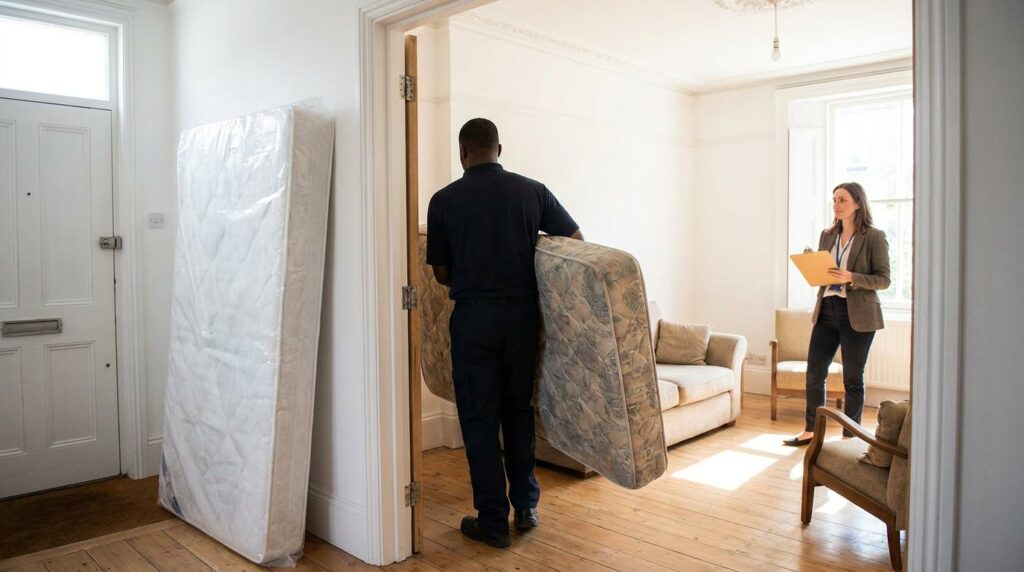
For landlords and letting agents in central London, the gap between one tenancy ending and the next beginning can shrink to almost nothing. A check-out runs late, a new tenant wants to move in earlier than planned, or an inventory reveals that a sofa, a bed frame or a wardrobe has to go. When the flat is let furnished, that short window has to cover far more than a clean and a fresh set of keys.
Why furnished lets make turnarounds harder
An unfurnished flat between tenants is mostly a cleaning and maintenance job. A furnished one is a logistics job as well. Furniture may need replacing after wear and tear, items the outgoing tenant left behind have to be removed, and anything the incoming tenant has asked to be taken out must go somewhere. In areas such as Bayswater and Paddington, where so many flats sit within period conversions and mansion blocks, every one of those tasks involves stairs, shared hallways and communal doors that other residents use every day.
Plan the order of work before the keys come back
The most useful thing a landlord or agent can do is decide the sequence of work in advance, ideally as soon as notice is served. A practical order usually looks like this:
- Check-out inspection and inventory, with photographs of every room.
- Removal of abandoned belongings, damaged furniture and anything the new tenant has declined.
- Repairs and decorating, once rooms are clear.
- Delivery and assembly of replacement furniture.
- Final clean, then the check-in inventory.
Moving furniture out before the clean, rather than after, saves paying for the same job twice. It also means any marks on walls or floors uncovered when a wardrobe is moved can be dealt with by the decorator rather than discovered at check-in.
Deciding what stays, what goes and what gets stored
Not every item that leaves a flat needs to be thrown away. A good bed frame that the next tenant does not want may suit another property in the portfolio, and spare dining chairs can be kept for future lets. Separating items into three groups during the check-out inspection – keep in place, remove and store, remove and clear – makes it much easier to brief whoever is doing the lifting, and keeps furniture from drifting between flats if you own several around Lancaster Gate.
Bringing in help on the day
When the timetable collapses to a single day, it is worth knowing in advance who can step in. London companies such as ZL Global offer same day removals in Lancaster Gate alongside clearances, furniture disassembly and reassembly, and secure storage, which covers most of what a furnished turnaround needs in one booking. Their storage can be short or long term, with items collected now and delivered to another address when they are wanted, which suits landlords holding spare furniture between lets.
ZL Global also offers a handyman and picture-hanging service, useful when mirrors, shelves or artwork have to be rehung before a new tenant arrives. Whoever you use, give them the building’s access arrangements, any rules about using a lift or communal entrance, and a clear list of which items are leaving and which are arriving.
Protecting the building and your neighbours
Many blocks in the City of Westminster have managing agents with their own rules about moving furniture in and out: permitted hours, protection for lifts and hallways, and notice to the porter. Check these as soon as the tenancy end date is known, because a refused lift booking can undo an otherwise tidy plan. If a vehicle needs to park outside for any length of time, a parking suspension may need to be applied for through the council, which is Westminster for most addresses, so build that into the plan too.
Protecting communal areas with floor and door coverings is not only courteous; it also avoids damage claims from the freeholder that can cost far more than the job itself.
Keeping records for the next check-out
Once the flat is ready, update the inventory with photographs of any new furniture, note where removed items have gone, and file receipts with the tenancy paperwork. When the next tenancy ends, that record makes the deposit conversation quicker and fairer for everyone.
A furnished turnaround will never be entirely predictable, but a clear order of work, a sensible plan for surplus furniture and a reliable team on call can turn a frantic day into a manageable one, and get the next tenant through the door on time.