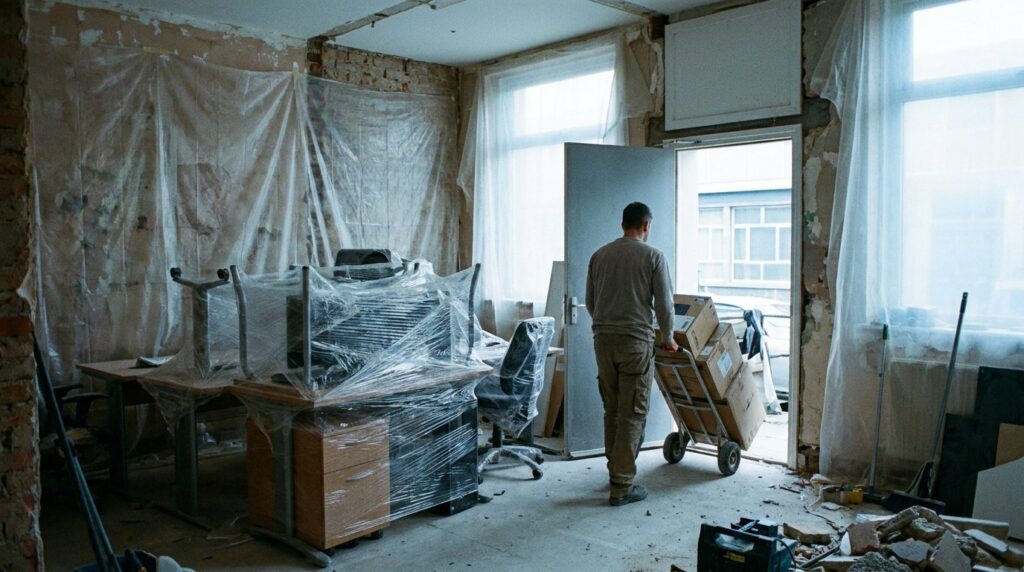
An office refurbishment sounds exciting until someone asks where the desks, filing cabinets and printers are supposed to go while the walls come down. Whether you are redecorating one floor or relocating the whole business, finding a safe, temporary home for your equipment is one of the first practical problems to solve, and it is far easier to solve early than in the week the contractors arrive.
Why equipment rarely survives a refurb in situ
It is tempting to push everything into one corner, throw a dust sheet over it and hope for the best. In practice, building work produces fine dust that finds its way into keyboards, monitors, printer mechanisms and server fans. Furniture gets knocked by ladders and trolleys. Clearing the space properly protects your kit and lets the contractors work faster, which often helps the project finish on schedule.
Deciding what goes into storage and what stays in use
Before booking anything, walk through the office with a notepad and sort items into three groups:
- Keep working: laptops, phones and anything staff need if they are working from home or from a temporary space.
- Store: desks, pedestals, meeting tables, spare chairs, cabinets, display stands and equipment that will return once the work is complete.
- Let go: broken chairs, obsolete monitors and furniture that will not suit the new layout.
That third group matters more than people expect. A refurbishment is the perfect moment to stop paying to store or move items nobody wants, so arrange for disposal or recycling before the storage date rather than after.
Preparing desks, IT and paperwork for storage
Good preparation makes the return journey painless. Photograph cable set-ups before unplugging anything, then bag and label leads with the device they belong to. Back up data and, where possible, keep sensitive files off devices that are going into storage. Wrap screens individually and keep them upright. Empty desk drawers into labelled boxes so the furniture is lighter and nothing rattles loose.
For paperwork, use sturdy boxes of a manageable size and mark each one with the department and a short description of its contents. A simple spreadsheet listing every box number and what is inside will save time if someone needs a particular folder halfway through the project.
Think about access before you need it
Refurbishments rarely run exactly to plan. A delayed delivery of flooring or an unexpected electrical problem can stretch a few weeks into a couple of months, and during that time you may need to collect a specific item. Choose storage that lets you reach your belongings when you need to, rather than only during limited opening times.
A Worcestershire example
Businesses in and around Worcester can look at what local removal firms offer for this kind of project. F & J Removals, a family-run company based at Hartlebury, provides office removals that include packing equipment and setting it up at the new site, with the aim of limiting downtime. It also offers personal and business storage in containerised units built to withstand the elements, which are regularly maintained and monitored.
Their storage can be used short-term during a move or for longer periods, and you can store as much or as little as you need. Access is available 24/7, 365 days a year, which suits a refurbishment where you may need to retrieve something unexpectedly. If you are planning works and need storage in Worcester, it is worth asking for a no-obligation quote, and their video quote or home visit options can help you gauge how much space your equipment will take.
Planning the return
The day the office reopens is the day staff expect everything to work. Agree a floor plan in advance and label each desk and box with its destination in the new layout, not the old one. Book the return delivery for a day or two before staff come back so there is time to connect IT, test printers and fix anything that has not gone to plan. If your storage provider also handles removals, coordinating collection and redelivery through one firm means fewer handovers and less chance of something being left behind.
Tell staff in good time when to clear their desks and how to request an item from storage if it becomes urgent.
With a clear inventory, careful packing and flexible storage, a refurbishment can be a relatively calm process. Your equipment stays clean and safe, the builders get a clear space, and your business returns to a fresh office with everything in its place.