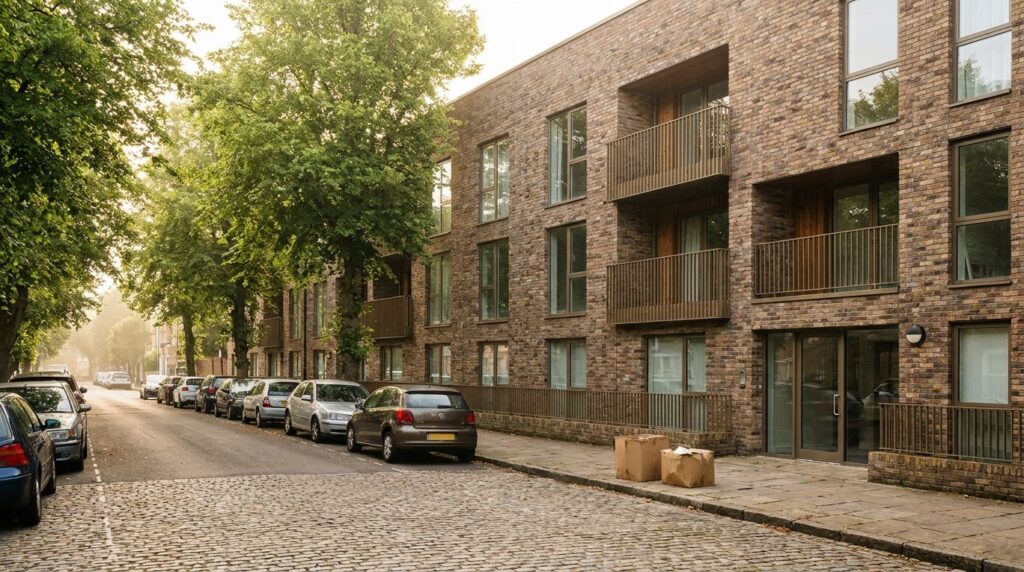
Moving from a house with a driveway to a flat in town often brings a surprise that has nothing to do with boxes or furniture. The new building may have no allocated space, a waiting list for permits, or a single bay that has to serve the whole household. Suddenly the second car, the one that only gets used for the odd weekend trip, has nowhere to live.
Find out exactly what parking you are getting
Before you decide anything, get the facts in writing. Ask the agent or landlord whether the flat includes a space, whether it is allocated or first come, first served, and whether visitors can park. If the street is in a resident permit zone, check the local council’s website for how many permits each address can have and whether there is a waiting list. Some new developments are designed with very little parking at all, so do not assume a second permit will be available.
Once you know the position, you can make a clear decision rather than paying for a car to sit on a street a mile away from your front door.
Is the second car still earning its keep?
Many households keep a second vehicle out of habit. A move is a good moment to tot up what it really costs: insurance, tax, servicing, MOT and the occasional repair, against how often it is actually driven. Be honest about its condition too. If it has a known fault, has failed its last MOT or has been sitting unused for months with a flat battery and soft tyres, it may be at the end of its useful life.
For a car in that state, scrapping is often the tidiest option. It removes the problem before moving day, so you are not trying to find somewhere to leave a vehicle that cannot move under its own power.
Timing the handover around moving day
The easiest time to deal with an unwanted car is while it is still on your current driveway, where access is simple and you are not competing with a removal lorry for space. Aim to have it gone a week or so before the move. On the day itself, the driveway and kerb outside will be needed for loading, and a second car in the way only complicates things for the crew.
If you live in or around Bristol, Scrap Cars and Vans Bristol is one local option to consider. The family-run service, based at Iron Acton, handles scrap cars and vans in Bristol and the surrounding area, including non-runners and MOT failures. You give them the registration, make, model, condition and where the car is parked, and they provide a quote that remains valid for seven days, which leaves time to plan the collection around your other moving tasks.
They are open seven days a week and collect from homes, driveways, car parks and roadside locations where it can be done safely. Their site states that collection is free across Bristol and the surrounding areas, subject to access and vehicle details.
Empty it and sort the paperwork
Before collection, go through the car carefully. Remove parking permits, toll tags, chargers, sunglasses, child seats and anything stored in the boot. Check under the seats and in the door pockets for keys and bank cards. If you have a personalised number plate you want to keep, apply to DVLA to retain it before the car goes.
Keep your V5C log book and photo identification ready for the handover. Once the car has been scrapped, you need to tell DVLA, and cars and light vans scrapped at an authorised treatment facility receive a Certificate of Destruction. GOV.UK sets out the current process and is the place to check the details. Then remember to cancel the insurance and update any parking accounts linked to the registration.
Starting fresh with one car, or none
Living with a single car, or switching to buses, bikes and car clubs, can feel like a big change. For many people moving into a town flat, though, it turns out to be simpler and cheaper, and it takes one more worry off the moving list.
Sort the parking question early, decide what the second car is really worth to you, and you can arrive at your new flat without a vehicle you have nowhere to put.